

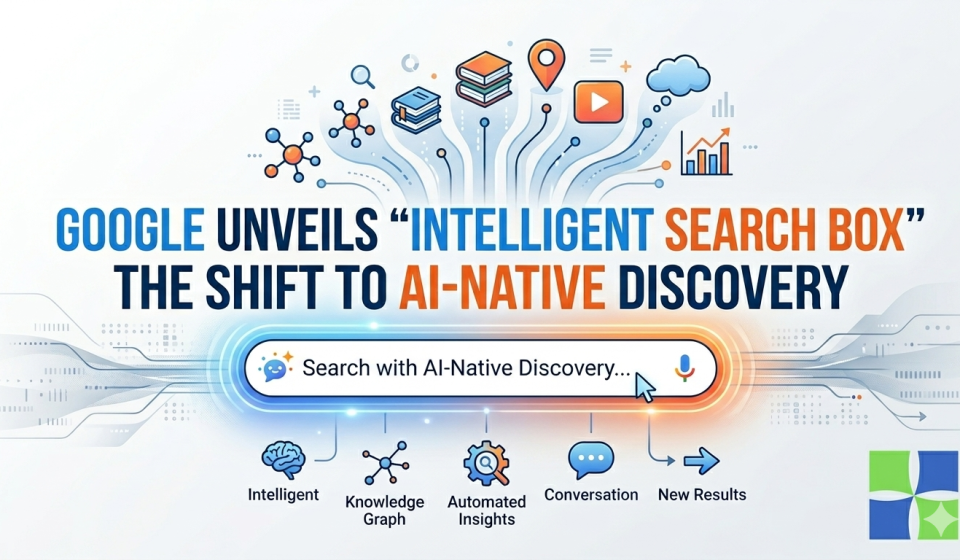
Google has rolled out its most radical interface transformation in a quarter of a century by introducing the Intelligent Search Box. Powered by Gemini 3.5 Flash, this update officially transitions Google from a traditional query-and-response search engine into an interactive AI discovery hub.
The redesign scraps the classic, static search bar in favor of an expansive, fluid canvas built to handle complex, multi-modal prompts.
Table of Contents
Key Features of the Intelligent Search Box
- Dynamic Canvas Expansion: The interface physically expands as you type, accommodating conversational, long-tail prompting rather than fragmented keywords.
Predictive Intent Suggestion: Moving far beyond basic autocomplete, the system uses contextual AI to anticipate your broader research goals.
Universal Multi-Modal Inputs: Users can seamlessly blend text, images, document files, video, and active Chrome tabs into a single prompt.
Global AI Mode Integration: The seamless transition from traditional search results to an immersive "AI Mode" is now live worldwide across both desktop and mobile layouts.
New Insights: The Strategic Impact on Digital Ecosystems
While this update focuses on user experience, the underlying implications for businesses, content creators, and SEO professionals are massive:
The Rise of Agentic Workflows:
As Sundar Pichai noted, search is evolving from one-off questions into ongoing conversations and multi-step tasks. Users are no longer just looking for a link; they are looking for an AI agent to execute a workflow (e.g., "Compare these three open tabs, find the best price, and draft a summary").
The "Zero-Click" Surge:
By making AI Overviews and AI Mode the default pathway, Google will resolve more user intents directly on the search page. Websites may see a drop in informational, top-of-funnel organic traffic.
A Shift in SEO Strategy:
Optimization is changing from "keyword matching" to AI Optimization (AIO). To win visibility, brands must ensure their data is highly structured, machine-readable, and authoritative enough to be cited inside Gemini's synthesized answers.

-

What are the leading AI search visibility solutions with built-in backlink analysis

By
Gone are the days when manually tracking rankings and hunting down link-building prospects was enough to dominate search engine results. Today, the algorithm is smarter,…
📆
-

The Impact of F1Soft on Nepal’s Digital Economy

By
Executive Summary F1Soft Group stands as a "Keystone Entity" in the digital transformation of Nepal. This whitepaper analyzes its two-decade journey from a dorm-room startup…
📆
-

I got the SEO customer using these 10 tips you can also try this one
By
Want more SEO clients? I use the same exact strategy in my SEO agency digital idea2grow and capture SEO leads with smart outreach techniques and…
📆
-

Google Unveils ‘Intelligent Search Box’: The Shift to AI-Native Discovery
By
Google has rolled out its most radical interface transformation in a quarter of a century by introducing the Intelligent Search Box. Powered by Gemini 3.5…
-

CapCut Partners with Google’s Gemini for In-App Editing
By
CapCut, the ByteDance video editing app popular with TikTok creators, announced a partnership to bring its tools directly into Google's Gemini AI app. Users will…
-

Google Says in short yes SEO is still relevant for generative AI search
By
Have you every think in your life that SEO will die in 2026 ? if you think then you were wrong. It's not me who…
📆

Hi my name is Sanjivan, my nickname is Sanji. Business student who spends way too much time on the internet but make it productive.
I write about business, tech, AI, and marketing the stuff that's actually changing how the world works.
No fluff. No "guru" energy. Just real thoughts from someone still figuring it out. 😄


